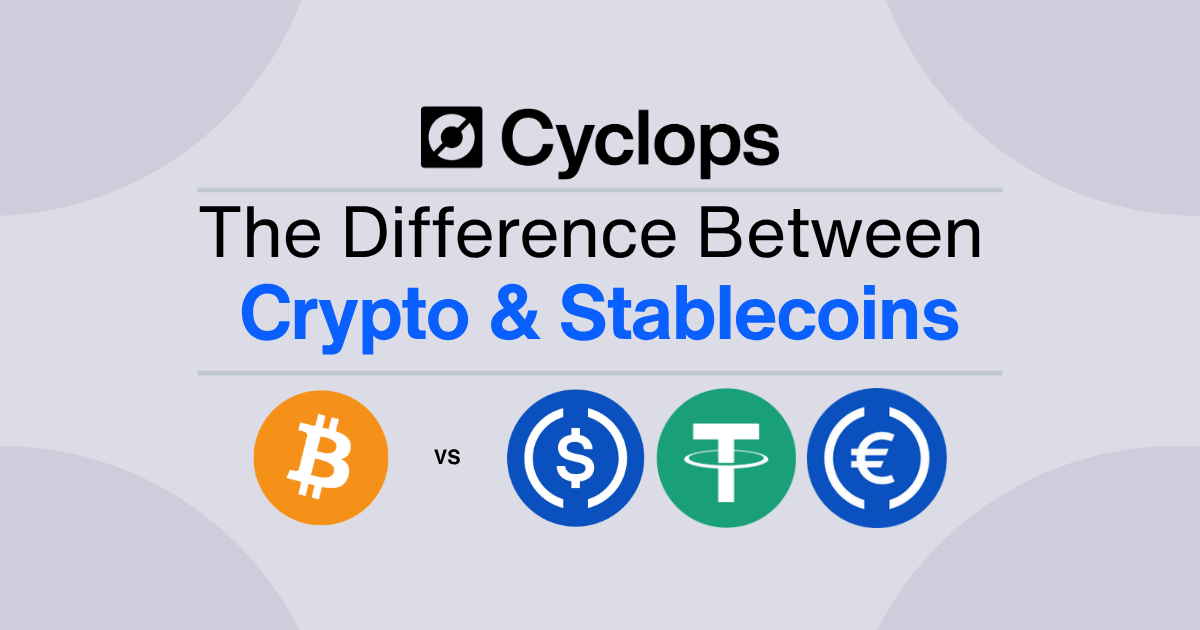
The Difference Between Crypto and Stablecoins — Why It Matters for Payments Companies
We've had several meetings this past week where prospects conflated the utility of crypto and the value of stablecoin use cases. This is a sign that we still have some work ahead of us when it comes to uncoupling the identity of crypto with the more payments-centric use cases involving stablecoins. This piece is a great introduction to these distinctions and why they matter.
Two blockchain-based tools with fundamentally different jobs in payments infrastructure.
Technically, stablecoins are a type of crypto asset. They run on the same blockchain infrastructure, confirm on-chain the same way and are often discussed in the same breath. But with a key difference. Stablecoins walk, talk and act like cryptocurrencies, but their value is pegged to that of a fiat currency. Simply put, these are dollars or euros or pounds and so on down the line, but they live and move within blockchain rails rather than a bank.
The payments industry must treat them as distinct categories — and for good reason. The way each one behaves in a payments stack is fundamentally different. That difference shapes product decisions, compliance frameworks and infrastructure choices in ways that are worth understanding.
What Is Crypto?
Bitcoin, Ethereum and other cryptocurrencies are decentralized digital assets whose value is determined by market supply and demand. Their prices change — Bitcoin reached an all-time high above $126,000 in October 2025 before pulling back meaningfully in the months that followed. That price movement is the defining characteristic of crypto as an asset class, and it's the one that shapes every product decision downstream for payments companies.
The underlying blockchain mechanics are the same as stablecoins — transactions confirm on-chain, they're final and irreversible. For payments acceptance, that's exactly what makes crypto valuable. Where the distinction matters is on the settlement and treasury side. A payments company's operational stack requires price predictability, and that's where stablecoins are most valuable.
What Are Stablecoins?
Stablecoins are a type of crypto asset — blockchain-based tokens pegged to a stable asset, most commonly a fiat currency. USDC, USDT, EURC and others are designed to maintain a 1:1 value with their reference currency. They carry the same settlement mechanics as crypto — speed, finality, 24/7 availability, low cost — paired with the price predictability that payments infrastructure requires.
That combination is why stablecoins have become the layer payments companies are building on. Annual stablecoin transaction volume hit $33 trillion in 2025, up 72% year over year, and the growth is concentrated in exactly the use cases payments companies care about: settlement, cross-border transfers and treasury management.
How Each One Shows Up in a Payments Stack
The simplest way to frame it: crypto is an asset class with speculative risks and complexity. Stablecoins are like blockchain-based currencies, acting as a payment instrument. Both have a place in a PSP's stack, they just serve different functions within it.
Stablecoins power the infrastructure layer — settlement, payouts and treasury management — where price stability and predictable reconciliation are what the operational stack requires. Crypto shows up on the acceptance side, where a growing segment of customers hold Bitcoin, Ethereum or other assets and want to spend them. The PSP converts the proceeds at the point of transaction. No crypto held, no price exposure carried and fiat settlement flows through as normal.
The regulatory frameworks reflect the same distinction. The GENIUS Act specifically defines and regulates "payment stablecoins" as a distinct category, and MiCA establishes a separate framework for stablecoin issuers in the EU. Different tools and frameworks, because they serve different purposes.
Where Cyclops Comes In
Before founding Cyclops, the team spent four years building both stablecoin and crypto products from inside Shift4 — one of the world's largest payment processors. That experience shapes how Cyclops thinks about where each product belongs and how they work together in a payments company's stack.